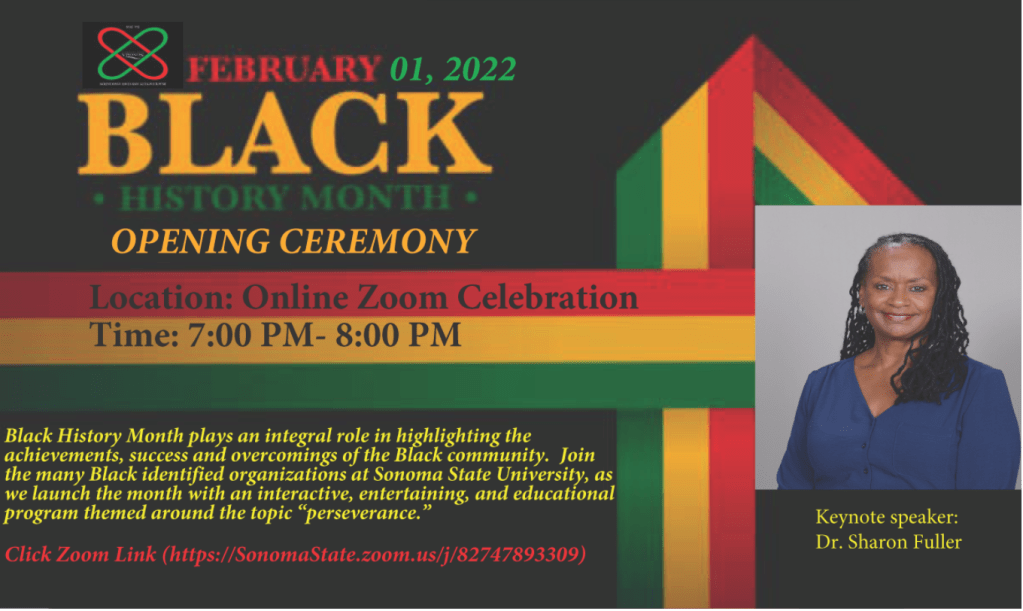
Dr. Sharon Fuller, Black History Month Keynote, Sonoma State University
Dr. Sharon Fuller, Black History Month Keynote, Sonoma State University
ABSTRACT
Western epistemologies on race defined blackness and indigeneity through scales of poverty, or more precisely, in frameworks privileging economic deprivation. Indigenous fishing communities are typically constructed as subsistence fishers whose practices only served to exacerbate resource scarcity as a result. In this article I use the case study of the Gullah Geechee, self-defined as culturally indigenous and racially black, to explore how consciousness, indigenous knowledge and cultural practices open up resources that enable them to achieve a level of autonomy. I draw on the livelihoods of three fishers, ranging from familial to commercial, to examine how the power of giving, through the cultural practices of reciprocity, sharing and cooperation, yield abundances vital to building a sense of community. This article suggests that indigenous ontologies offer alternate ways to conceptualize indigeneity in the Americas.
Human Ecology Journal
 Sharon Y. Fuller